Testing and Continuous Integration
CCMI CDT: Software Engineering Fundamentals
2025-12-03
Testing
Software Testing
Software testing is a crucial activity in the software development life cycle that aims to evaluate and improve the quality of software products. Thorough testing is essential to ensure software systems function correctly, are secure, meet stakeholders’ needs, and ultimately offer value to end users.
Benefits of Testing
- Risk mitigation: identify defects and failures early.
- Confidence: results reproducible with well planned tests.
- Compliance: ensure that software adheres to standards.
- Code re-usability: other researchers can confirm that the code works before using it.
- Works as minimal documentation: users can see how the code is meant to work.
- Optimisation: provides vital feedback.
- Cost savings: reduces downstream costs.
Manual Testing
- Done in person by clicking through application.
- Interacting with the software and APIs with the appropriate tool.
- Expensive.
- Prone to human error.
Automated Testing
- Performed by a machine that runs a script written in advance.
- Vary in complexity.
- Much more reliable and robust.
- Quality of automated tests depends on how well the scripts are written.
- Key part of continuous integration and continuous delivery (CI/CD).
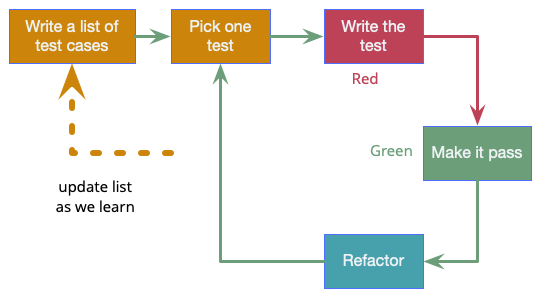
Test Driven Development (TDD)
- Write a test for the next bit of functionality you want to add.
- Write the functional code until the test passes.
- Refactor both new and old code to make it well structured.
Coverage
Coverage
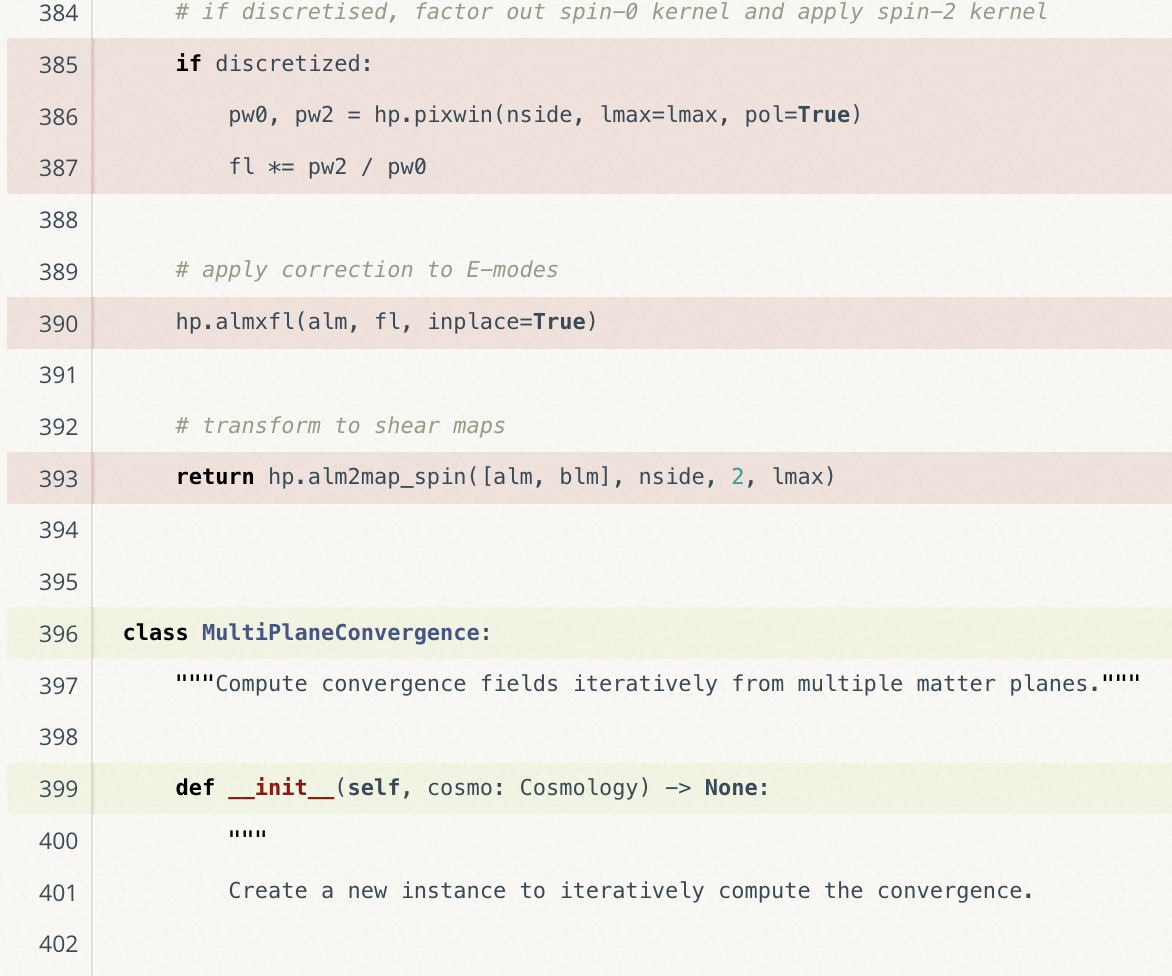
Types of coverage:
- Statement: checks if every line of code has run at least once.
- Branch: ensures both the “true” and “false” outcomes have been tested.
- Function: measures whether all functions or methods were executed during testing.
- Condition: verifies each condition in your code evaluates both to true and false at least once.
- Path: tries to cover every possible route through your application.
Coverage
Types of Tests
Unit Tests
- Low level.
- Close to the source of the application.
- Tests individual methods/functions.
- Cheap to automate.
- Run quickly.
Unit Tests
Unit Tests
import pytest

def divide(a, b):
    if b == 0:
        raise ValueError("Cannot divide by zero")
    return a / b

def test_divide_by_zero_raises_error():
    with pytest.raises(ValueError, match="Cannot divide by zero"):
        divide(10, 0)

@pytest.mark.parametrize(
    "a,b,expected",
    [
        (10, 2, 5),
        (20, 4, 5),
        (100, 10, 10),
    ],
)
def test_divide_various_inputs(a, b, expected):
    assert divide(a, b) == expected
Integration Tests
- Verifies that different part of the application work well together.
- e.g. test interaction with database/make sure microservices work together.
- More expensive to run.
- Many parts of the application need to be up and running.
Integration Tests
import pytest
from sqlalchemy import create_engine
from myapp.repository import UserRepository

@pytest.fixture
def db_engine():
    """Create in-memory database for testing"""
    engine = create_engine("sqlite:///:memory:")
    yield engine
    engine.dispose()

@pytest.fixture
def user_repo(db_engine):
    """Create repository with test database"""
    repo = UserRepository(db_engine)
    repo.create_tables()
    return repo
Integration Tests
from myapp.models import User

def test_create_and_retrieve_user(user_repo):
    # Test that we can save to database and retrieve
    user = User(name="Alice", email="alice@example.com")
    user_id = user_repo.save(user)

    retrieved_user = user_repo.get_by_id(user_id)
    assert retrieved_user.name == "Alice"
    assert retrieved_user.email == "alice@example.com"

def test_update_user_email(user_repo):
    user = User(name="Bob", email="bob@example.com")
    user_id = user_repo.save(user)

    user_repo.update_email(user_id, "newemail@example.com")
    updated_user = user_repo.get_by_id(user_id)

    assert updated_user.email == "newemail@example.com"
Functional Tests
- Focus on business requirements of application.
- Only verify the output of an action.
- In comparison to an integration test it would be a specific value from the database rather than just the connection.
Functional Tests
import pytest
from myapp.services import OrderService
from myapp.models import Order, Product

@pytest.fixture
def order_service():
    return OrderService()

def test_order_total_calculation(order_service):
    # Test business requirement: order total is correctly calculated
    order = Order()
    order.add_item(Product(name="Widget", price=10.00), quantity=2)
    order.add_item(Product(name="Gadget", price=15.50), quantity=1)

    total = order_service.calculate_total(order)

    # Verify specific business outcome
    assert total == 35.50
Functional Tests
import pytest
from myapp.models import Order, Product

def test_discount_applied_for_orders_over_50(order_service):
    order = Order()
    order.add_item(Product(name="Widget", price=60.00), quantity=1)

    total = order_service.calculate_total(order)

    # Business rule: 10% discount for orders over $50
    assert total == 54.00

def test_out_of_stock_items_cannot_be_ordered(order_service):
    order = Order()
    product = Product(name="Rare Item", price=100.00, stock=0)

    with pytest.raises(ValueError, match="out of stock"):
        order_service.process_order(order.add_item(product, quantity=1))
End-to-End Tests
- Replicates user behaviour in a complete application environment.
- Verifies that user flows work as expected.
- Can be as simple as loading a web page.
- Expensive to perform.
- Hard to support when automated.
- Only need a few.
End-to-End Tests
import pytest
from selenium import webdriver
from selenium.webdriver.common.by import By

@pytest.fixture
def browser():
    driver = webdriver.Chrome()
    driver.get("http://localhost:8000")
    yield driver
    driver.quit()

def test_user_can_view_order_history(browser):
    # Login
    browser.find_element(By.ID, "login-link").click()
    browser.find_element(By.ID, "username").send_keys("testuser")
    browser.find_element(By.ID, "password").send_keys("password123")
    browser.find_element(By.ID, "login-btn").click()

    # Navigate to order history
    browser.find_element(By.ID, "account-menu").click()
    browser.find_element(By.ID, "order-history-link").click()

    # Verify orders are displayed
    orders = browser.find_elements(By.CLASS_NAME, "order-item")
    assert len(orders) > 0
End-to-End Tests
from selenium.webdriver.common.by import By
from selenium.webdriver.support.ui import WebDriverWait
from selenium.webdriver.support import expected_conditions as EC

def test_complete_purchase_flow(browser):
    # Simulate complete user journey

    # User browses products
    browser.find_element(By.ID, "products-link").click()

    # User adds item to cart
    browser.find_element(By.CLASS_NAME, "add-to-cart-btn").click()

    # User goes to checkout
    browser.find_element(By.ID, "cart-icon").click()
    browser.find_element(By.ID, "checkout-btn").click()

    # User fills in shipping info
    browser.find_element(By.ID, "name").send_keys("John Doe")
    browser.find_element(By.ID, "address").send_keys("123 Main St")
    browser.find_element(By.ID, "submit-order").click()

    # Verify order confirmation appears
    confirmation = WebDriverWait(browser, 10).until(
        EC.presence_of_element_located((By.ID, "order-confirmation"))
    )
    assert "Order placed successfully" in confirmation.text
Acceptance Testing
- Formal tests that verify if a system satisfies business requirements.
- Require entire application to be running while testing.
- Replicate user behaviours.
- Can also measure the performance, reject if certain goals not met.
Acceptance Testing
import pytest
import requests

BASE_URL = "http://localhost:8000"

@pytest.fixture
def api_client():
    """Fixture to ensure API is ready"""
    # this simulates a basic readiness check on the running API service.
    response = requests.get(f"{BASE_URL}/health")
    assert response.status_code == 200
    return requests.Session()
Acceptance Testing
import time

BASE_URL = "http://localhost:8000"

def test_user_can_register_and_login(api_client):
    # Acceptance criteria: User must be able to register and login within 3 seconds
    start_time = time.time()

    # User registers
    registration_data = {
        "username": "newuser",
        "email": "newuser@example.com",
        "password": "SecurePass123",
    }
    response = api_client.post(f"{BASE_URL}/api/register", json=registration_data)
    assert response.status_code == 201

    # User logs in
    login_data = {"username": "newuser", "password": "SecurePass123"}
    response = api_client.post(f"{BASE_URL}/api/login", json=login_data)
    assert response.status_code == 200
    assert "token" in response.json()

    # Performance requirement: must complete within 3 seconds
    elapsed_time = time.time() - start_time
    assert elapsed_time < 3.0, f"Registration and login took {elapsed_time:.2f}s"
Acceptance Testing
BASE_URL = "http://localhost:8000"

def test_registered_user_can_access_protected_resources(api_client):
    # Register and login
    registration_data = {
        "username": "protecteduser",
        "email": "protected@example.com",
        "password": "SecurePass123",
    }
    api_client.post(f"{BASE_URL}/api/register", json=registration_data)

    login_response = api_client.post(
        f"{BASE_URL}/api/login",
        json={"username": "protecteduser", "password": "SecurePass123"},
    )
    token = login_response.json()["token"]

    # Access protected resource
    headers = {"Authorization": f"Bearer {token}"}
    response = api_client.get(f"{BASE_URL}/api/profile", headers=headers)

    assert response.status_code == 200
    assert response.json()["username"] == "protecteduser"
Performance Testing
- Evaluate how a system performs under a particular workload.
- Help measure reliability, speed, scalability, responsiveness.
- e.g. observe response times when executing a high number of requests.
- Determines if an application meets performance requirements.
Performance Testing
import requests
import time
from concurrent.futures import ThreadPoolExecutor, as_completed

BASE_URL = "http://localhost:8000"

def test_response_time_under_load():
    """Test that API responds within acceptable time under concurrent requests"""

    def make_request():
        start = time.time()
        response = requests.get(f"{BASE_URL}/api/products")
        elapsed = time.time() - start
        return response.status_code, elapsed

    # Simulate 100 concurrent requests
    with ThreadPoolExecutor(max_workers=50) as executor:
        futures = [executor.submit(make_request) for _ in range(100)]
        results = [future.result() for future in as_completed(futures)]

    # All requests should succeed
    status_codes = [r[0] for r in results]
    assert all(code == 200 for code in status_codes)

    # 95th percentile response time should be under 500ms
    response_times = sorted([r[1] for r in results])
    p95_time = response_times[int(len(response_times) * 0.95)]
    assert p95_time < 0.5, f"95th percentile response time: {p95_time:.3f}s"
Performance Testing
import requests
import time

BASE_URL = "http://localhost:8000"

def test_database_query_performance():
    """Test that database queries complete within acceptable time"""

    response_times = []

    for _ in range(50):
        start = time.time()
        response = requests.get(f"{BASE_URL}/api/users?limit=100")
        elapsed = time.time() - start
        response_times.append(elapsed)
        assert response.status_code == 200

    avg_time = sum(response_times) / len(response_times)
    max_time = max(response_times)

    # Average query time should be under 100ms
    assert avg_time < 0.1, f"Average query time: {avg_time:.3f}s"
    # No single query should take more than 200ms
    assert max_time < 0.2, f"Max query time: {max_time:.3f}s"
Performance Testing
import pytest
import requests
from concurrent.futures import ThreadPoolExecutor, as_completed
import time

BASE_URL = "http://localhost:8000"

@pytest.mark.parametrize(
    "endpoint",
    [
        "/api/products",
        "/api/categories",
        "/api/search?q=test",
    ],
)
def test_endpoint_throughput(endpoint):
    """Test that endpoints can handle high throughput"""

    def make_request():
        return requests.get(f"{BASE_URL}{endpoint}").status_code

    start_time = time.time()

    with ThreadPoolExecutor(max_workers=20) as executor:
        futures = [executor.submit(make_request) for _ in range(100)]
        results = [future.result() for future in as_completed(futures)]

    elapsed = time.time() - start_time

    # Should handle 100 requests in under 5 seconds
    assert elapsed < 5.0
    # All should succeed
    assert all(status == 200 for status in results)

    # Calculate requests per second
    rps = len(results) / elapsed
    assert rps > 20, f"Throughput: {rps:.2f} req/s"
Smoke Testing
- Basic tests that check the basic functionality of an application.
- Meant to be quick to run.
- Goal to give the assurance that major features are working as expected.
- Useful after a new build to decide whether to run more expensive tests.
- Or after a deployment to make sure application is running in the new environment.
Smoke Testing
import requests

BASE_URL = "http://localhost:8000"

def test_application_is_running():
    """Basic check that application responds"""
    response = requests.get(f"{BASE_URL}/health")
    assert response.status_code == 200

def test_database_connection():
    """Verify database is accessible"""
    response = requests.get(f"{BASE_URL}/api/health/db")
    assert response.status_code == 200
    assert response.json()["database"] == "connected"
Smoke Testing
import requests

BASE_URL = "http://localhost:8000"

def test_main_pages_load():
    """Check that critical pages return successfully"""
    pages = ["/", "/products", "/about", "/contact"]

    for page in pages:
        response = requests.get(f"{BASE_URL}{page}")
        assert response.status_code == 200, f"Page {page} failed to load"

def test_api_endpoints_respond():
    """Verify main API endpoints are working"""
    endpoints = [
        "/api/products",
        "/api/categories",
        "/api/health",
    ]

    for endpoint in endpoints:
        response = requests.get(f"{BASE_URL}{endpoint}")
        assert response.status_code in {200, 401}, (
            f"Endpoint {endpoint} returned {response.status_code}"
        )
Smoke Testing
import requests

BASE_URL = "http://localhost:8000"

def test_static_assets_load():
    """Check that static resources are accessible"""
    assets = [
        "/static/css/main.css",
        "/static/js/app.js",
    ]

    for asset in assets:
        response = requests.get(f"{BASE_URL}{asset}")
        assert response.status_code == 200, f"Asset {asset} not found"
Smoke Testing
Run with pytest -m smoke.
import pytest
import requests

BASE_URL = "http://localhost:8000"

@pytest.mark.smoke
def test_critical_user_flow():
    """Quick test of most critical user action"""
    # User can view products
    response = requests.get(f"{BASE_URL}/api/products")
    assert response.status_code == 200
    products = response.json()
    assert len(products) > 0, "No products available"
Continuous Integration
GitHub Actions
name: Test

on:
  push:
    branches:
      - main
  pull_request:

jobs:
  test:
    runs-on: ubuntu-latest
    strategy:
      matrix:
        python-version: ["3.11", "3.12", "3.13", "3.14"]
    steps:
    - name: Checkout source
      uses: actions/checkout@v4

    - name: Set up uv ${{ matrix.python-version }}
      uses: astral-sh/setup-uv@v7
      with:
        python-version: ${{ matrix.python-version }}

    - name: Install dependencies
      run: uv sync --all-groups

    - name: Test with pytest
      run: uv run pytest --cov --cov-report=lcov
Miscellaneous
Mocking
Fowler describes mocks as pre-programmed objects with expectations which form a specification of the calls they are expected to receive. In other words, mocks are a replacement object for the dependency that has certain expectations that are placed on it; those expectations might be things such as validating a sub-method has been called a certain number of times or that arguments are passed down in a certain way.
Mocking
from unittest.mock import Mock
from myapp.services import EmailService

def test_send_welcome_email():
    # Mock the email client to avoid actually sending emails
    mock_email_client = Mock()
    email_service = EmailService(email_client=mock_email_client)

    email_service.send_welcome_email("user@example.com", "John")

    # Verify the email client was called correctly
    mock_email_client.send.assert_called_once_with(
        to="user@example.com",
        subject="Welcome!",
        body="Hello John, welcome to our service!",
    )
Mocking
from unittest.mock import Mock, patch
from myapp.services import EmailService, UserService

@patch("myapp.services.EmailClient")
def test_user_registration_sends_email(mock_email_client):
    # Mock at the class level
    user_service = UserService()

    user_service.register_user("newuser@example.com", "password123")

    # Verify email was sent during registration
    mock_email_client.return_value.send.assert_called_once()

def test_email_service_retries_on_failure():
    # Mock that fails first, then succeeds
    mock_client = Mock()
    mock_client.send.side_effect = [ConnectionError(), None]

    email_service = EmailService(email_client=mock_client, max_retries=2)
    email_service.send_email("test@example.com", "Subject", "Body")

    # Should have been called twice (one failure, one success)
    assert mock_client.send.call_count == 2
Mutation Testing
Mutation testing is a way to be reasonably certain your code actually tests the full behaviour of your code. Not just touches all lines such as a coverage report will tell you, but actually tests all behaviour, and all weird edge cases. It does this by changing the code in one place at a time, as subtly as possible, and running the test suite. If the test suite succeeds it counts as a failure, because it could change the code and your tests are blissfully unaware that anything is amiss.
Mutation Testing
Examples of mutations are changing “<” to “<=”. If you have not checked the exact boundary condition in your tests, you might have 100% code coverage but you would not survive mutation testing.
Checkout boxed/mutmut.
Mutation Testing
Original code:
def calculate_discount(price, is_member):
    if price > 100:
        discount = 0.1
    else:
        discount = 0.05

    if is_member:
        discount += 0.05

    return price * (1 - discount)

# Test suite
def test_discount_for_large_order():
    assert calculate_discount(150, False) == 135.0

def test_discount_for_member():
    assert calculate_discount(50, True) == 45.0
Mutation Testing
Mutation examples:
# Mutant 1: Change > to >=
def calculate_discount(price, is_member):
    if price >= 100:  # Changed
        discount = 0.1
    # ... rest of code

# Mutant 2: Change 0.1 to 0.2
def calculate_discount(price, is_member):
    if price > 100:
        discount = 0.2  # Changed
    # ... rest of code

# Mutant 3: Remove the member check
def calculate_discount(price, is_member):
    if price > 100:
        discount = 0.1
    else:
        discount = 0.05

    # if is_member:  # Removed
    #     discount += 0.05

    return price * (1 - discount)
Conclusions
- Always test your code.
- Unit tests are easy to implement and cheap to run.
- All examples in Python but can be easily ported.
- Can experiment with TDD, maybe this is difficult in research software - discuss?
- GitHub Actions free for open source software.
- Testing ever more important in an AI slop world.

Testing and Continuous Integration